Ardea
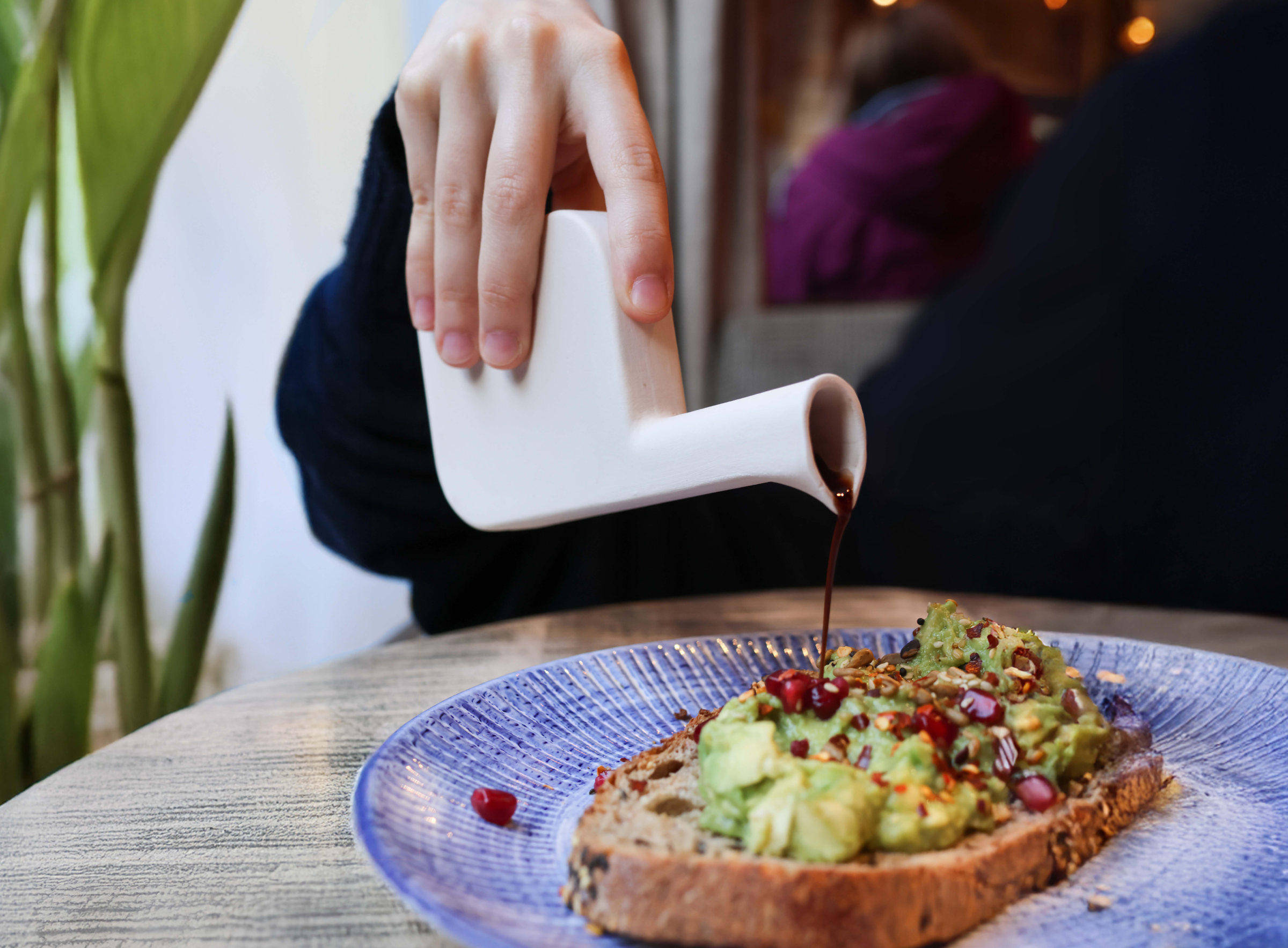
A slipcast ceramic balsamic vinegar pourer, shaped after the heron, with a long asymmetric neck for a small, controlled stream.
- Problem
- Balsamic vinegar is thick and precious, yet it is usually poured from bottles that glug and overflow.
- Approach
- Studied bird forms, tested how a bottle’s shape changes its pour, then CNC machined a master model to make a plaster mould for slipcasting.
- Outcome
- A neutral ceramic body, a cherrywood and cork stopper, and a neck that pours a small, controlled stream.
- Role
- Designer & maker
- Timeline
- Studio project
- Team
- Solo
- Tools
- CAD, CNC, Plaster, Slipcasting, Wood lathe
Skills
- Form development
- Model making
- Mould making
- Slipcasting
- Turning
Phases
- 01Observe
- 02Ideate
- 03Test
- 04Mould
- 05Cast
- 06Finish
01 / Observation
Starting from the shape of a bird.
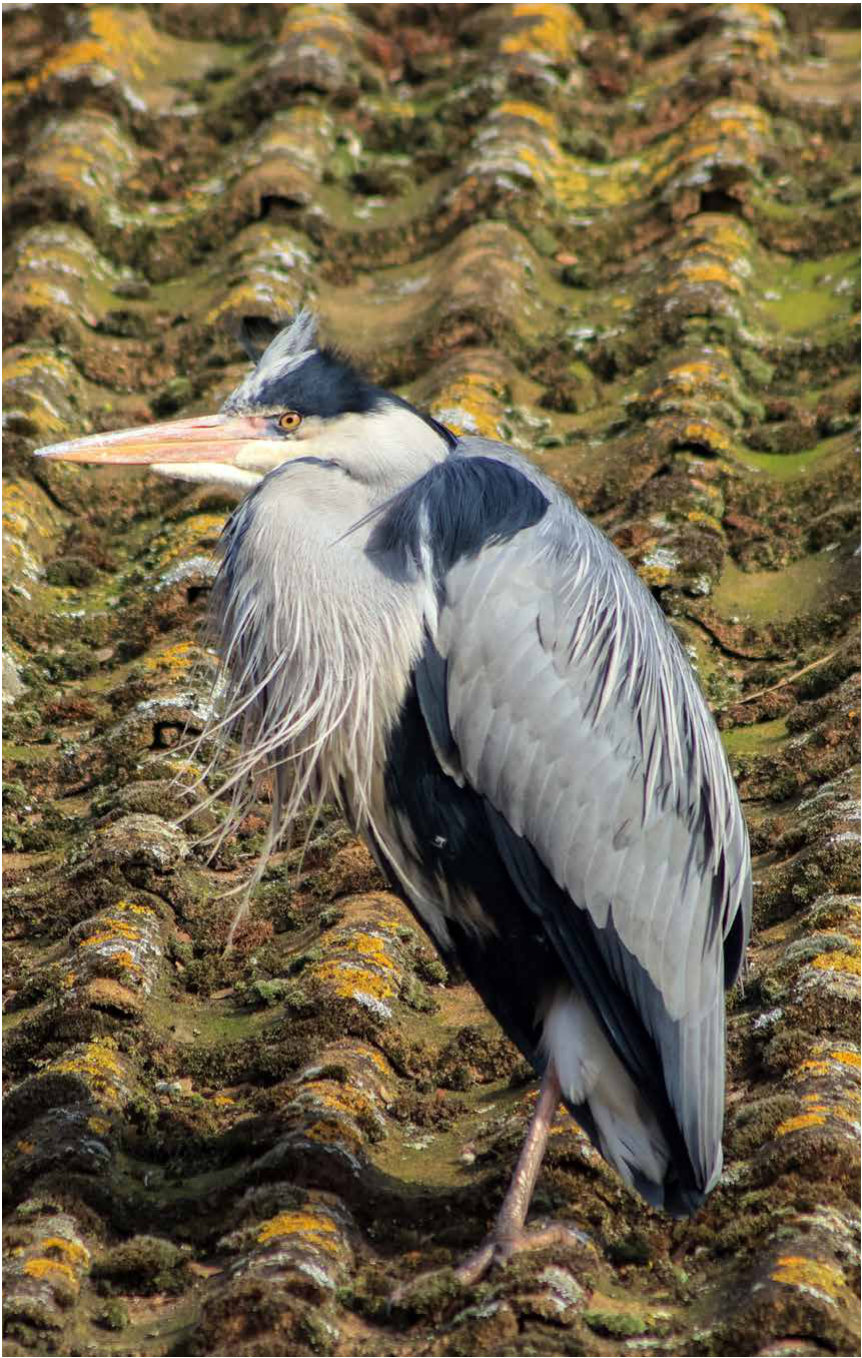
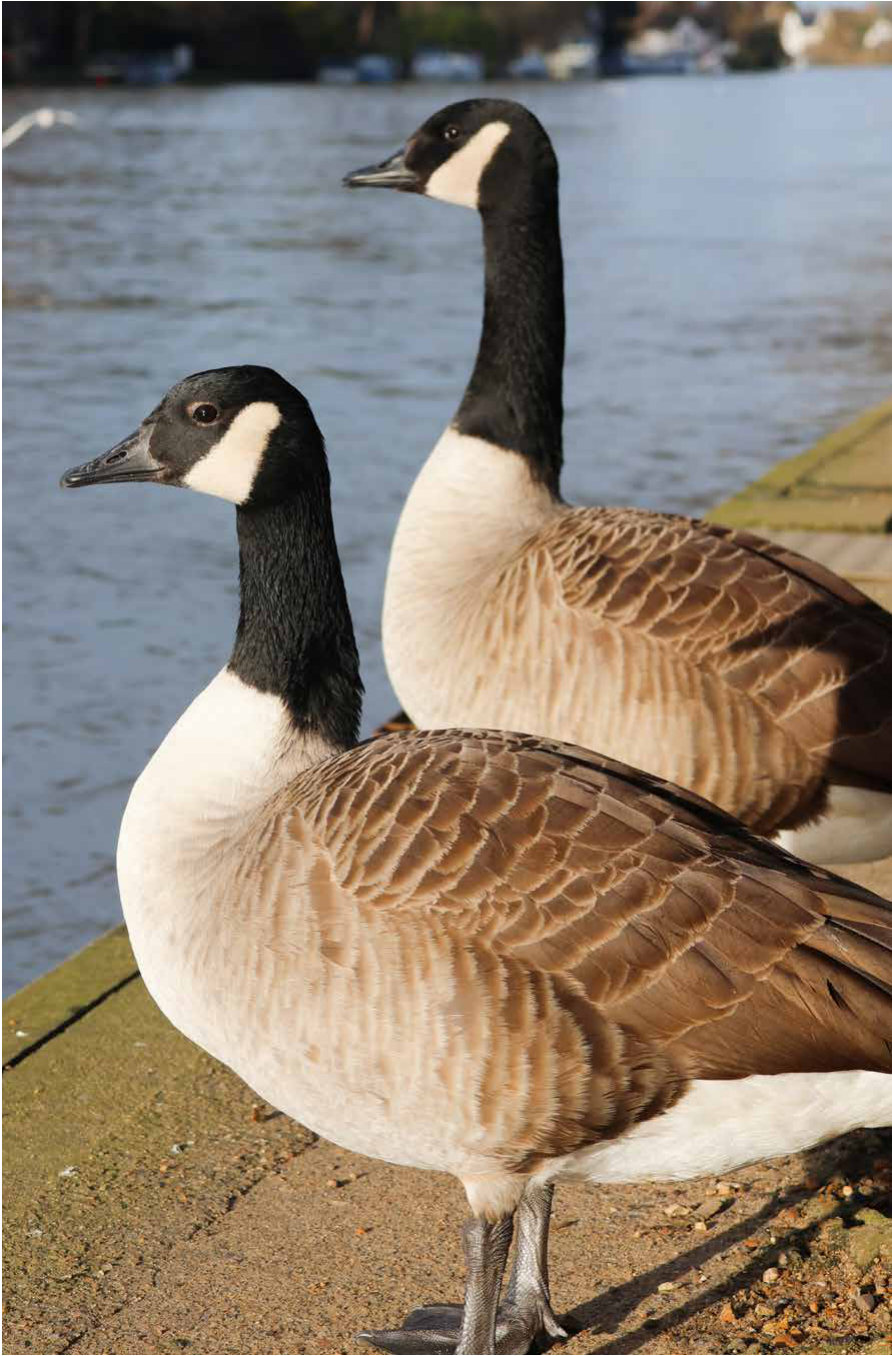
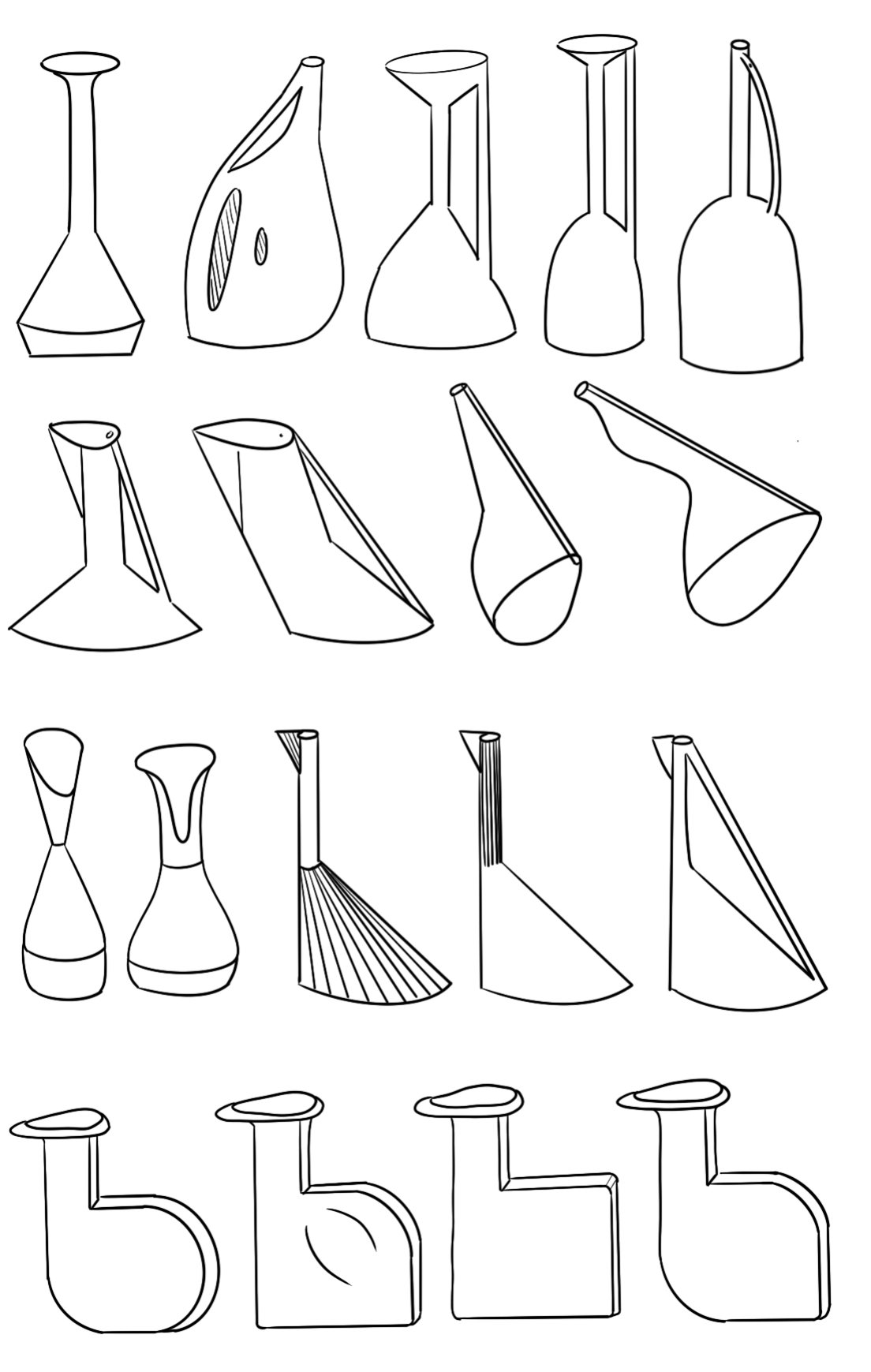
Photographing herons and geese, I looked at how a long neck rises from a compact body, then sketched bottles that borrow the same gesture.
02 / Testing
Testing how form changes the pour.
Pouring from different bottles showed how much the neck controls the stream. Card models then tested size ratios, and clay tops tested character.
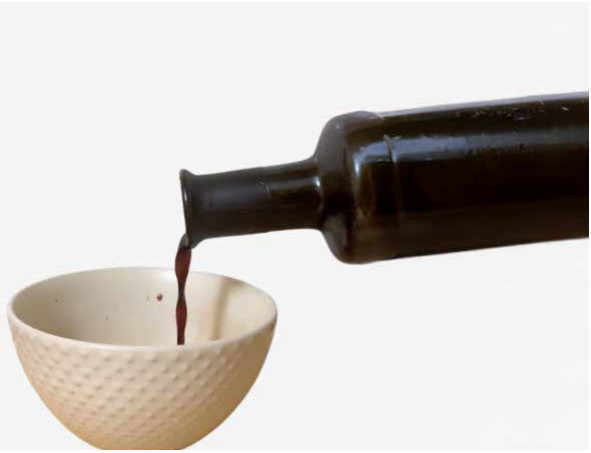
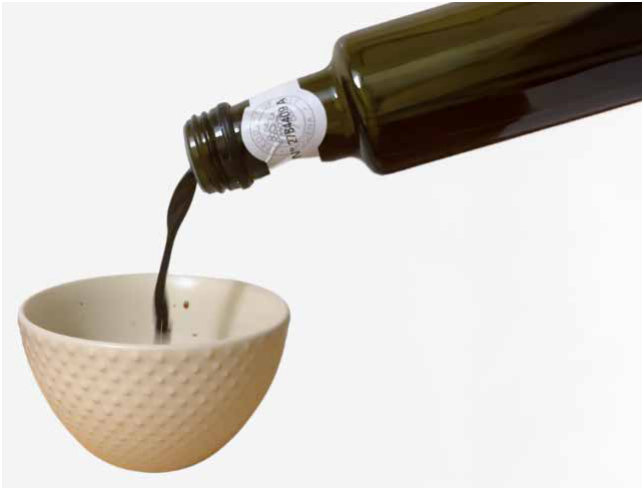
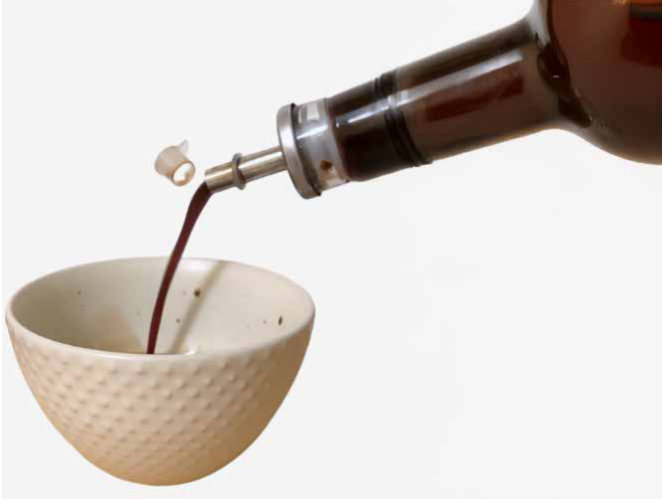
Bottle form affects pour control.
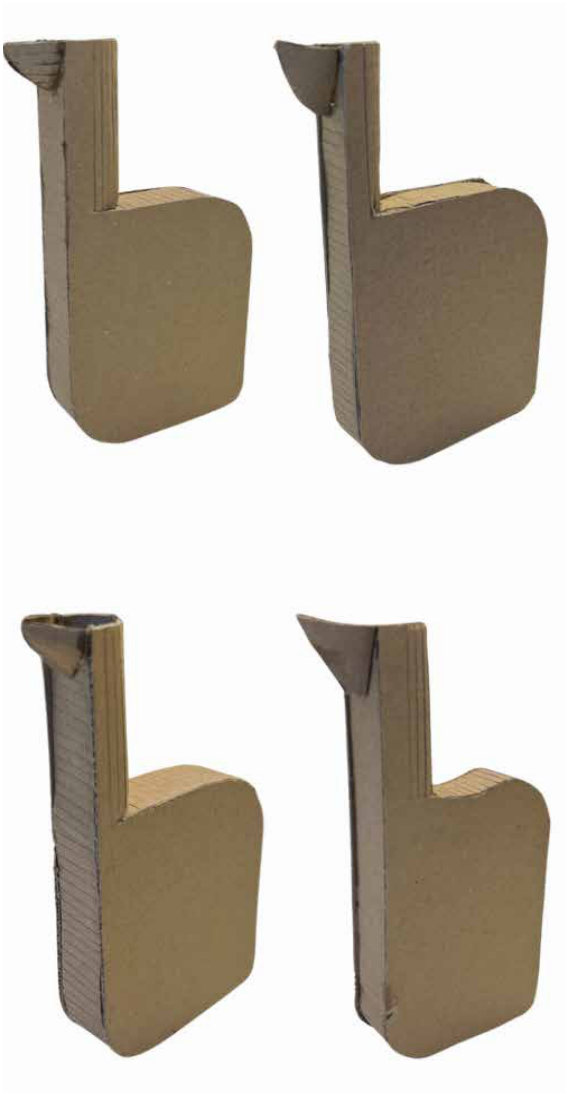
Testing size ratios
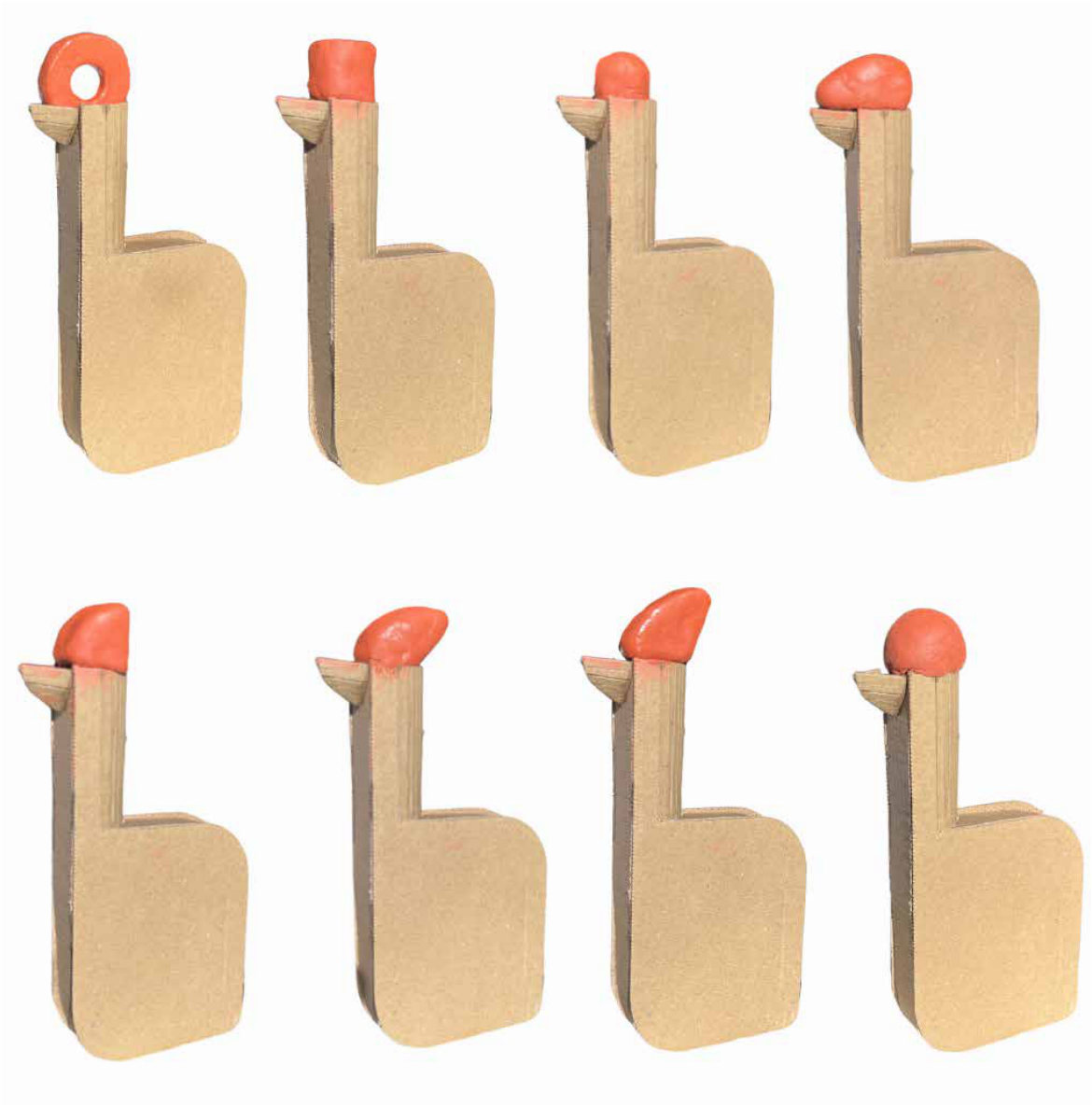
Each bottle top gives the form a different personality
03 / Technical
From technical drawing to plaster mould.
The master model was CNC machined 10% larger than the technical drawing, plus a spare, then used to cast a two-part plaster mould.
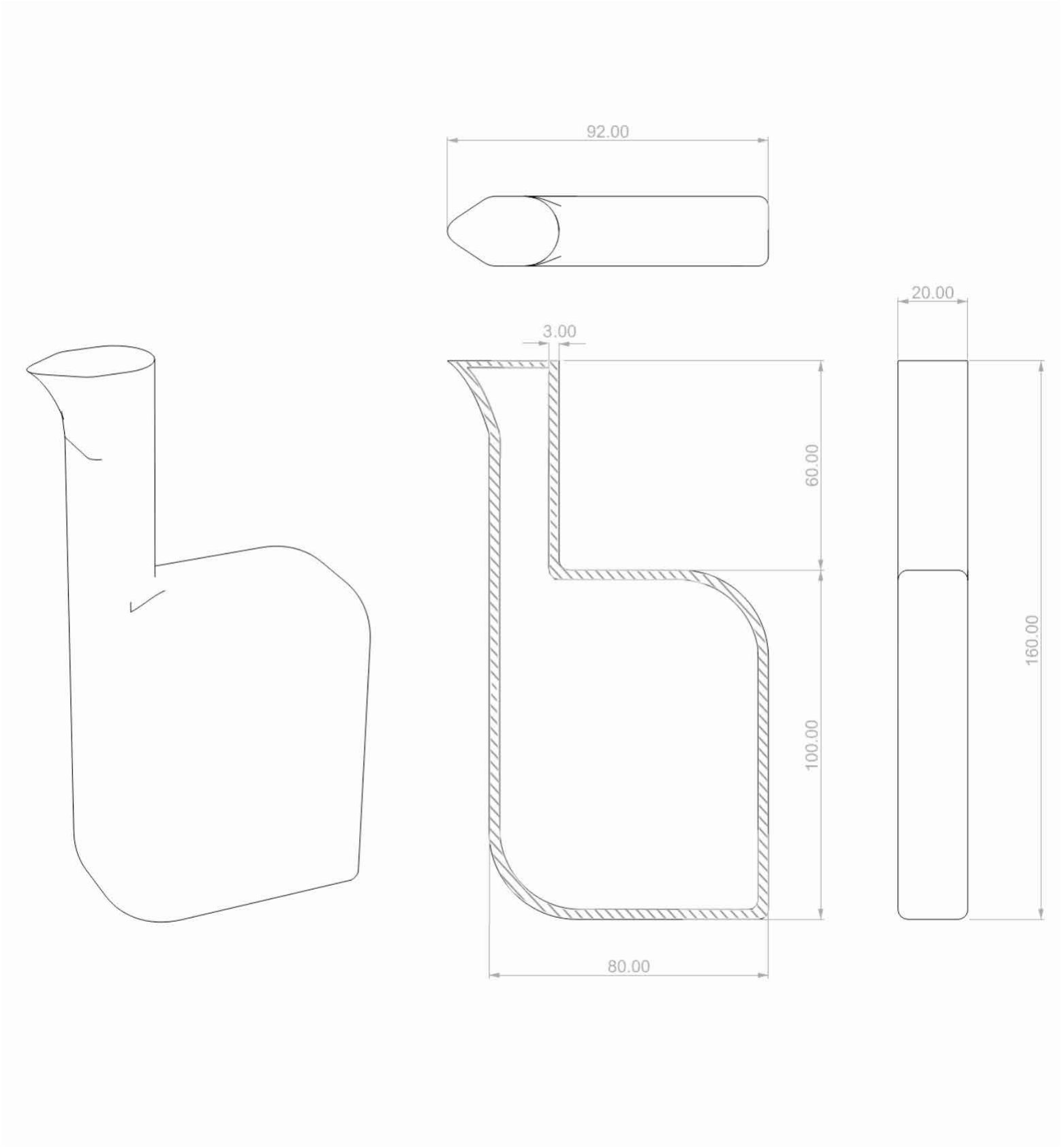
- Height
- 160 mm
- Height
- Body footprint
- 80 × 20 mm
- Body footprint
- Master model oversize
- +10%
- Master model oversize
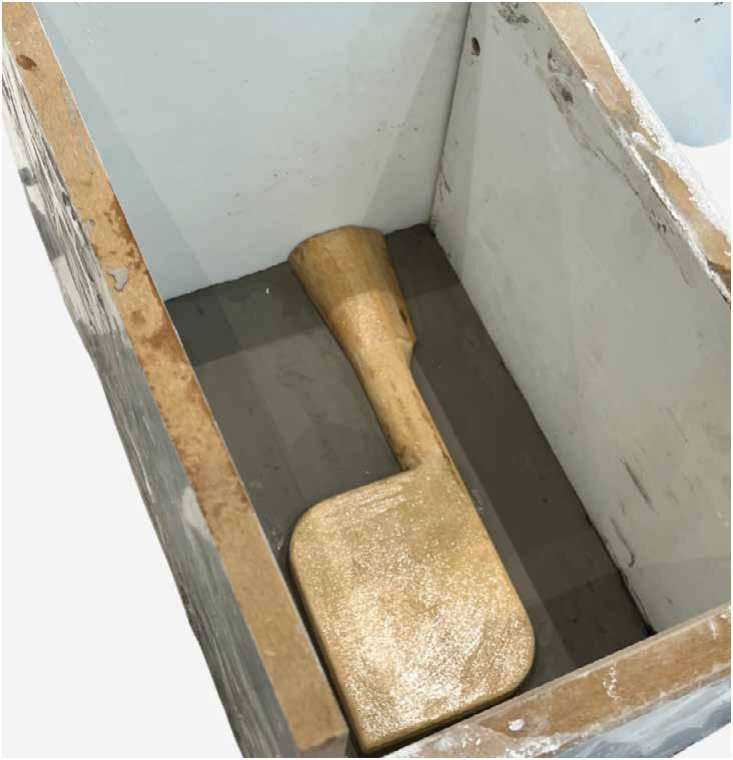
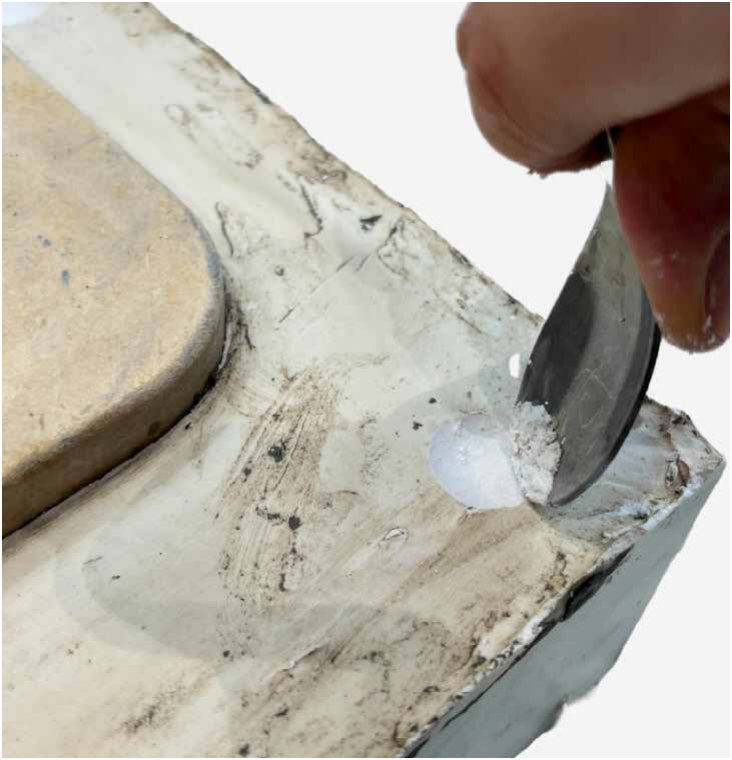
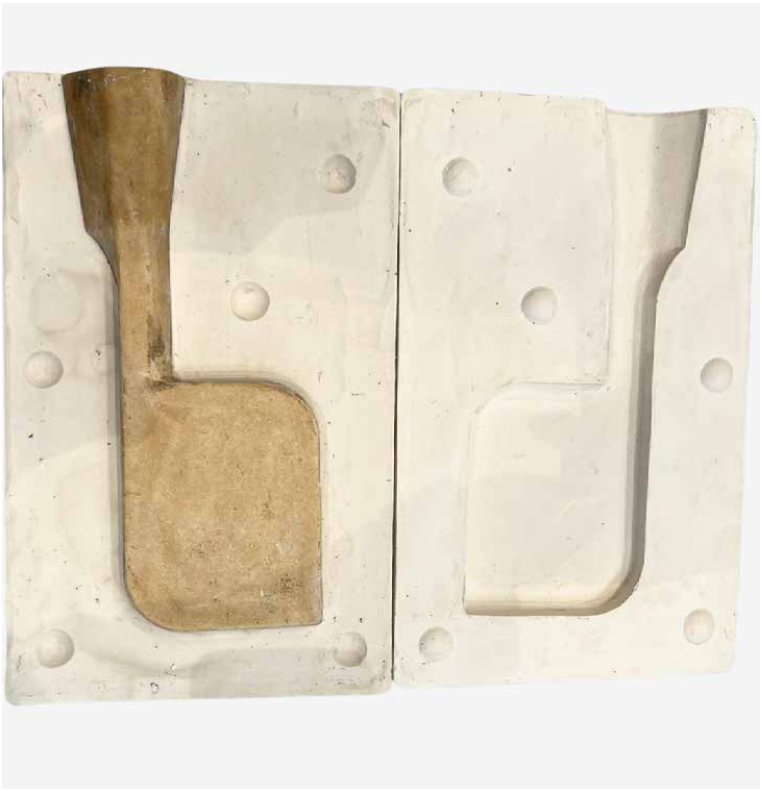
Plaster mould from the CNC master model.
04 / Making
Slipcast in ceramic, topped on the lathe.
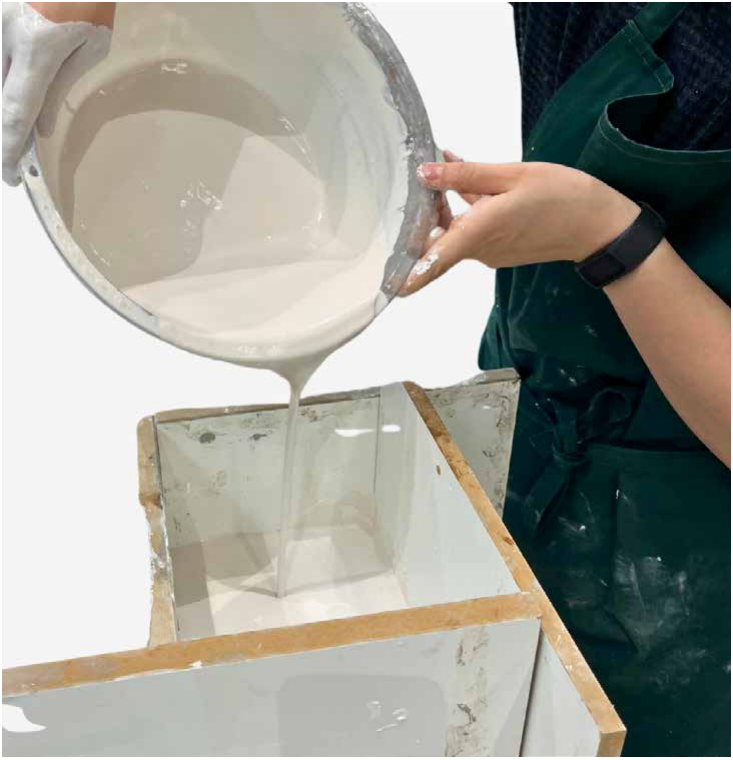
Slip is poured into the mould and drained to leave a thin wall, then released and refined. The stopper is turned from cherrywood and fitted with cork.
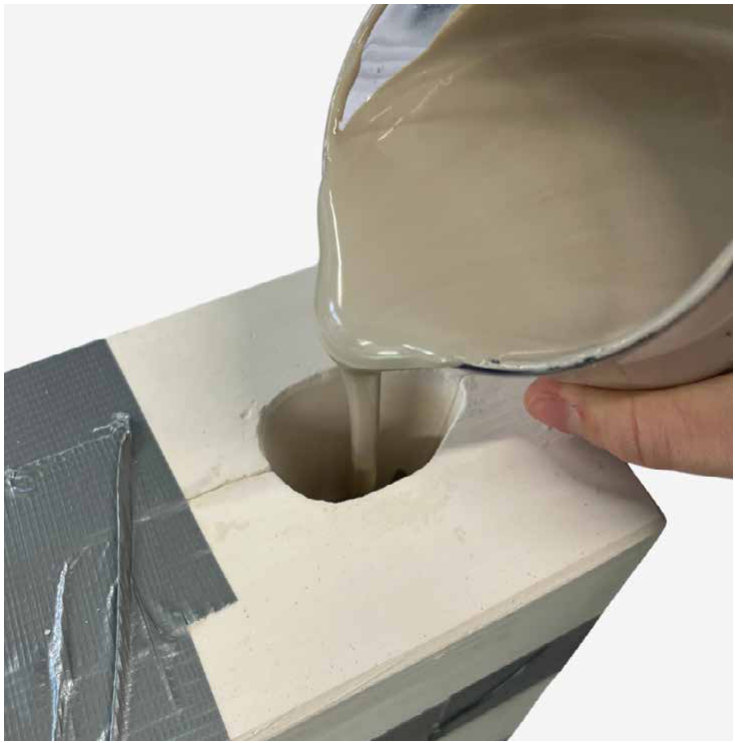
01Pour the slip
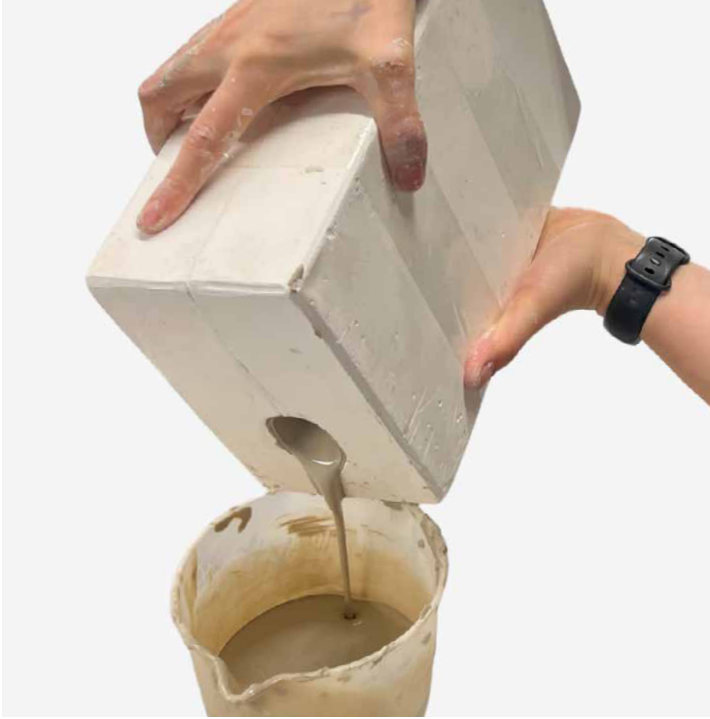
02Drain the excess
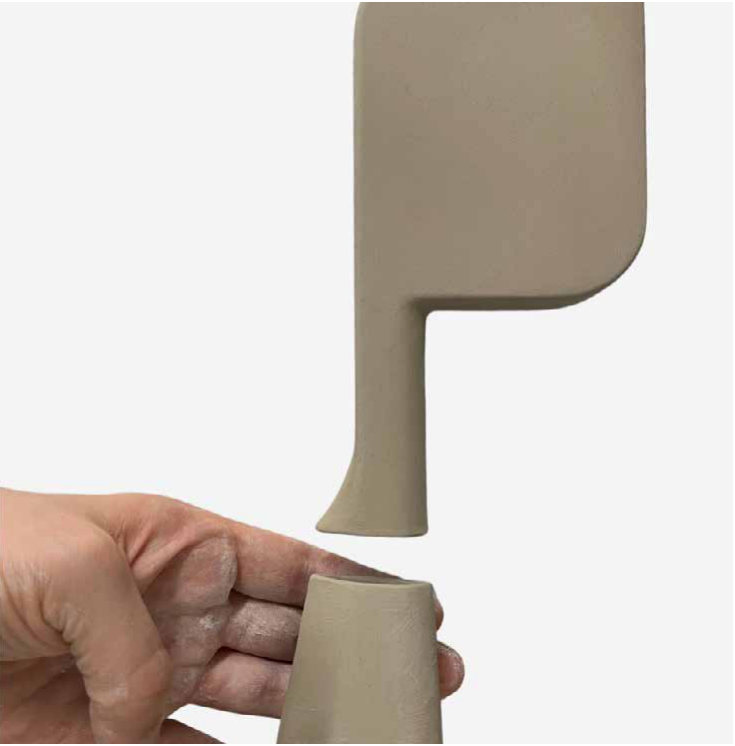
03Release the cast
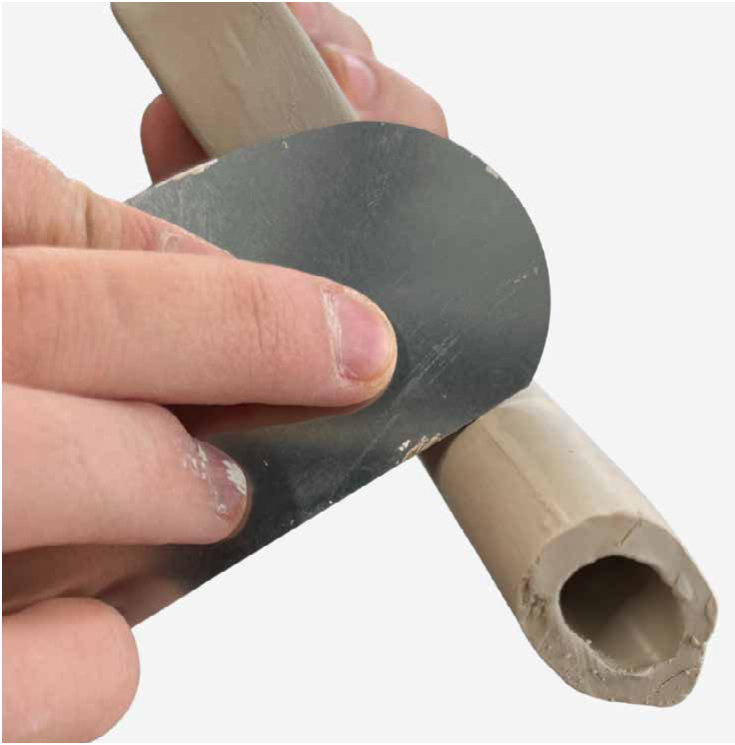
04Refine the edges
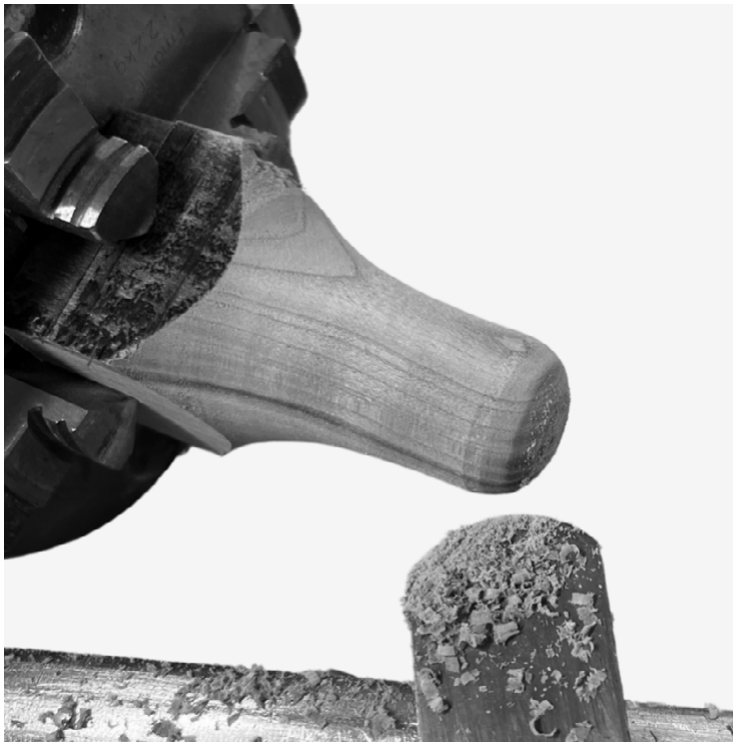
05Turn the cherrywood
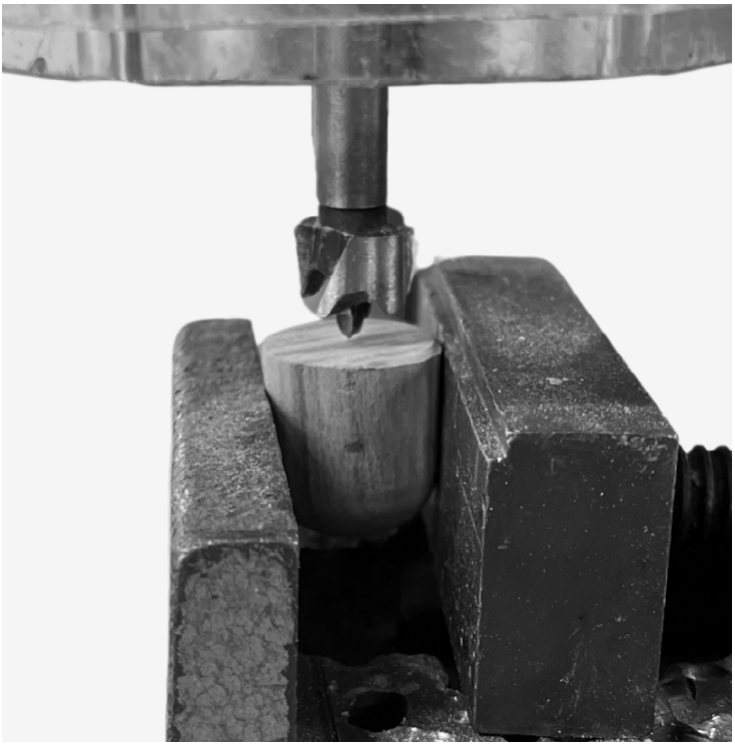
06Drill for the cork
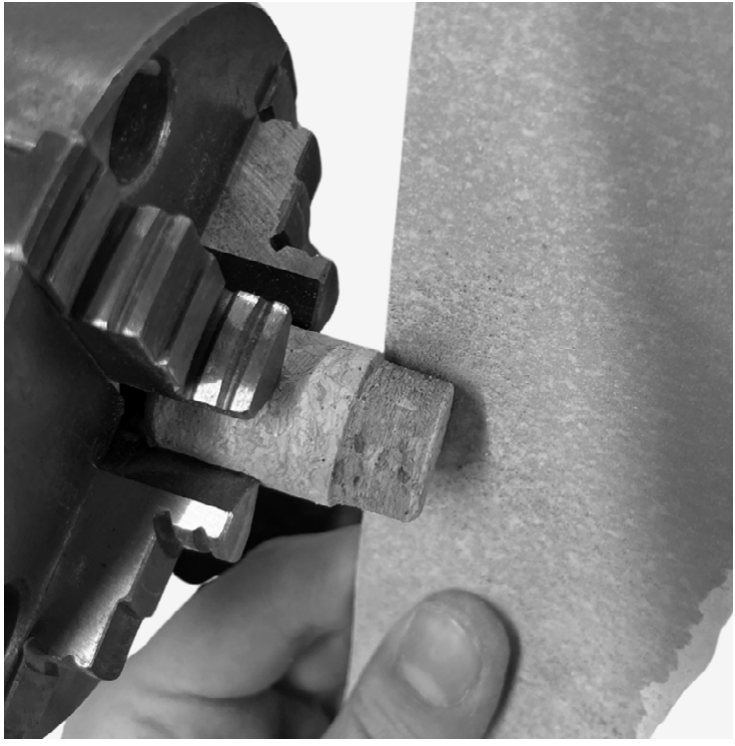
07Turn the cork
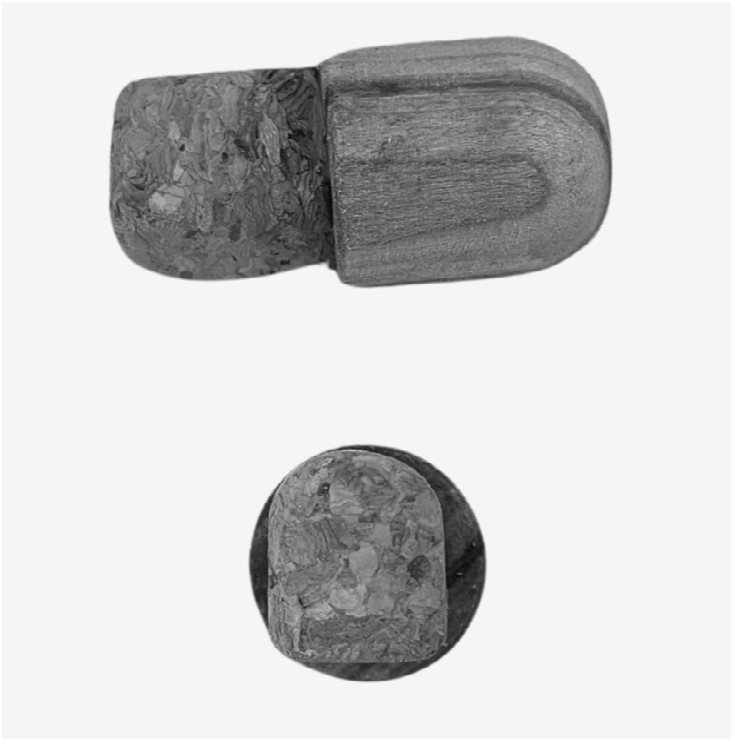
08The finished stopper
05 / Outcome
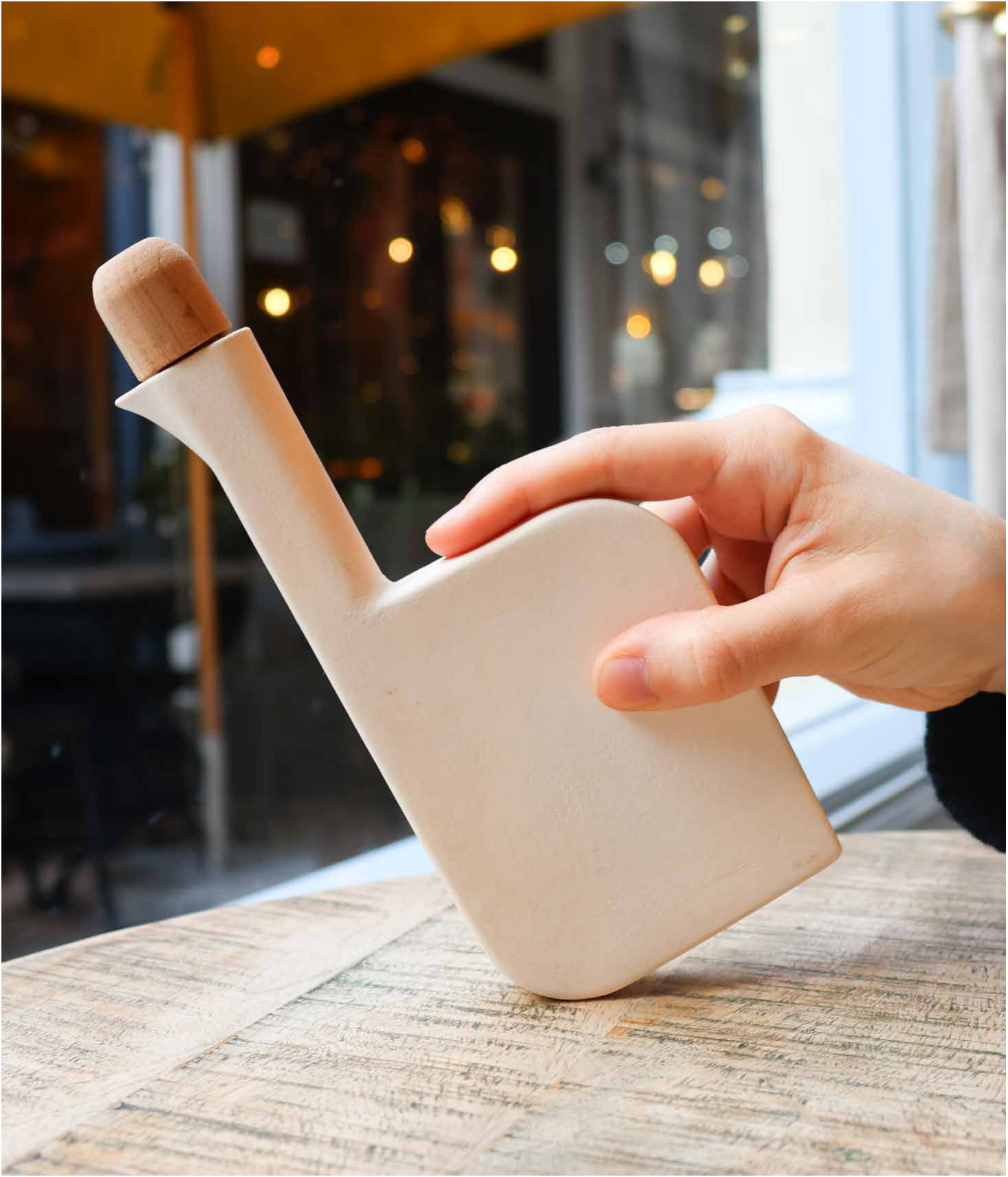
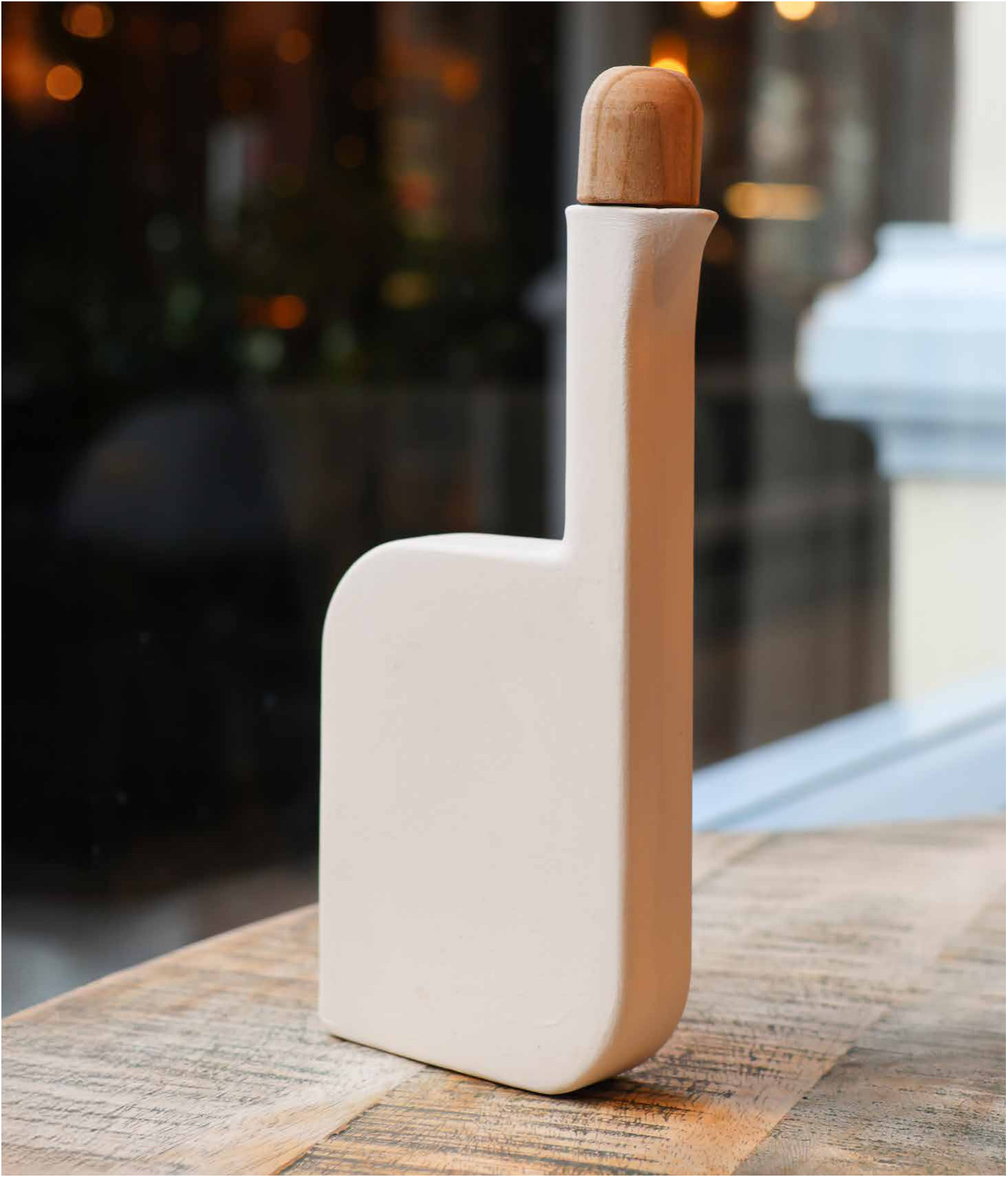
A pourer that holds itself like a heron.
- 01
Neutral ceramic body
Ceramic keeps the flavour profile neutral, so the vinegar tastes as it should.
- 02
Cherrywood & cork stopper
A turned top seals the bottle to preserve the vinegar.
- 03
Asymmetric long neck
Pours a small, controlled stream that prevents overflow, and gives the bottle the posture of the great heron, genus Ardea.